Live Recording Mixing – Live Album & Concert Mixing
Concert recordings people
want to listen to.
Professional mixing and mastering for live concert recordings – for bands, choirs, orchestras and theatre productions. Remote, worldwide.
Plenty of concerts get recorded – and then nothing happens. The tracks sit on a hard drive because nobody is quite sure how to turn them into something you can release.
How we mix concert recordings
That's exactly where we come in. We've been mixing live recordings for over ten years – club shows, church and choir concerts, festivals in front of several thousand people. You send us the multitracks, we send back a finished mix.
Not quite what you need? A studio take rather than a live recording? → Mixing & Mastering. A whole song from idea to finished track? → Music Production & Recording.
Mixed by punchline studio.
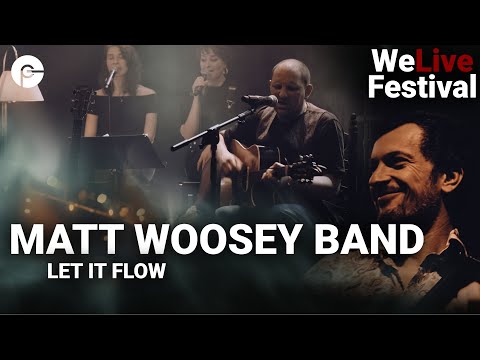
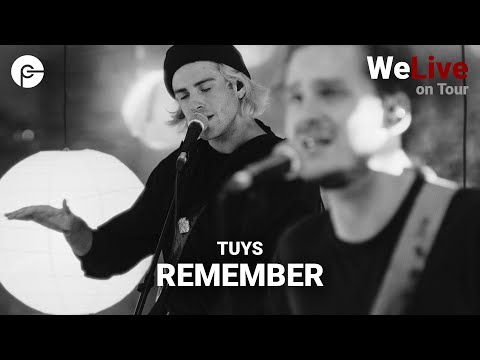
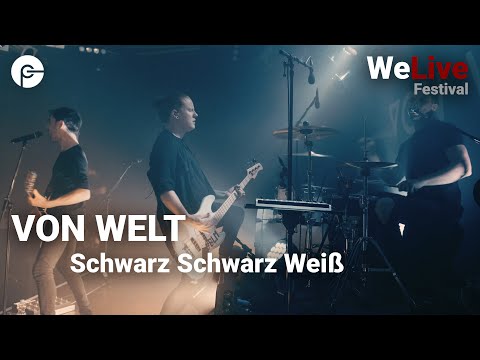
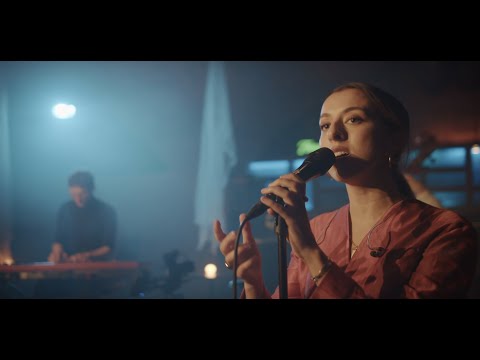
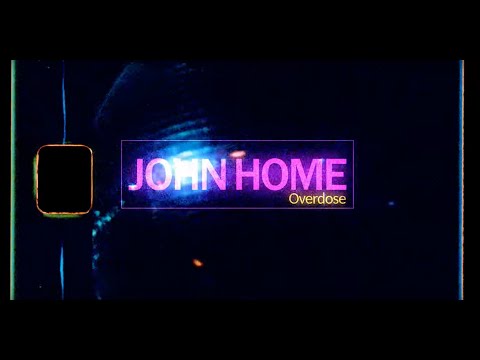
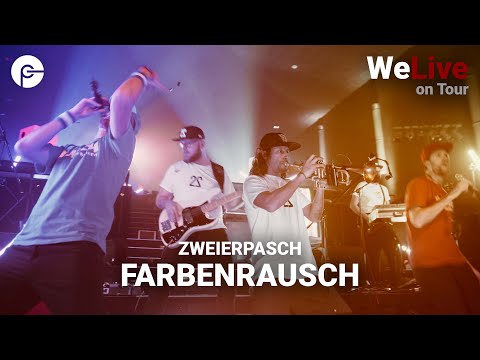
Every video below is a real concert recording that we mixed and mastered. Best listened to on headphones.
Why a live mix doesn't work like a studio mix.
In a studio recording each instrument is recorded on its own. The guitar track contains only the guitar, the vocal track only the vocals. At a concert that's impossible: every mic on stage is open at the same time, so they all pick each other up. The drums are audible in the vocal mic, the guitar amps are in the drum overheads, and the room mics capture everything at once, audience included.
On top of that come things a studio session never has to deal with: the level shifts from song to song, there's feedback, there's talking between songs, and there's applause. All of it can be dealt with – just not with studio methods. You can't remove the bleed between mics – you have to work with it. You can't take the room away – you can only shape it. And you can't just flatten out the level differences, because that kills the dynamics a concert lives on.
Many studios take on live work and only realise halfway through how different it is from a studio production. For us, it's our main focus.
Who sends us their live recordings.
The process is always the same: you send us the tracks, we mix. What changes is what matters most in each kind of music.
Bands & artists
A live album, a live EP, a single for streaming, or the recording of a release show. We mix rock, pop, folk, jazz, hip-hop and funk.
With a band it almost always comes down to the same question: how do you make the mix as punchy as a studio production without losing the energy of the concert? That's where most live mixes fall down. They end up sounding either like a bootleg or like a sterile studio recording.
Choirs, orchestras & classical
Choir concerts, chamber concerts, orchestral performances and church music. Usually the recording is for the archive, a CD for members, or a record of the performance for funders and sponsors.
We treat classical recordings differently from band material: less processing, more care with room, balance and dynamics. The challenge here is rarely loudness. It's keeping individual voices and sections audible without the ensemble losing its cohesion.
Theatre, dance & festivals
Theatre productions, dance performances, festival recordings and livestreams. Here the client is usually the venue or the production company rather than the artists themselves.
In stage productions, speech intelligibility trumps everything else. Radio mics, lavs, hall reverb and audience noise all work against it. On request we deliver to EBU R128 for broadcast and on-demand platforms.
What happens to your material.
Live Recording Mixing
Input: multitrack recording from the desk or interface
- Material review and an honest assessment before we quote
- Session setup, gain staging, phase correction
- Bleed control
- Room sound shaping and EQ
- Noise reduction, feedback removal and de-clicking (iZotope RX)
- Level and tonal matching between songs and takes
- Drum enhancement and replacement as needed
- Vocal editing and light pitch correction
- EQ, compression and saturation per track
- Stereo field, depth, automation
- Applause, stage announcements and transitions as agreed
- 2 rounds of revisions included
Mastering & delivery
Input: a mix from us or a finished stereo mixdown
- Analogue and digital signal chain
- Consistency across the whole concert
- Gapless transitions for live albums
- Loudness for streaming: −14 LUFS (Spotify), −16 LUFS (Apple)
- Broadcast: EBU R128 / −23 LUFS on request
- True peak limiting (−1 dBTP)
- Stem mastering on request
- DDP and CD masters on request
- ISRC embedding on request
- WAV (24–32 bit / 44.1–192 kHz) + MP3 320 kbps
- Separate masters for video and streaming
- 2 rounds of revisions included
What live mixing costs.
All prices include German VAT. For business clients with a valid EU VAT ID we invoice net under the reverse-charge procedure. Live material takes more work than a studio production, so the rates sit slightly above our standard mixing.
- Song up to approx. 6 minutes, up to 32 tracks
- Bleed and room control
- Noise reduction & restoration
- Matching between takes
- Drum enhancement
- 2 revisions
- Streaming-optimised
- Consistency across the concert
- Gapless transitions for live albums
- Broadcast on request
- 2 revisions
- Everything in mixing + mastering
- Coordinated workflow
- 4 revisions
- All formats
- Fastest turnaround
For a whole concert we don't bill song by song. With lots of short songs, the tiered discount applies – up to 10 %. For classical, church and orchestral concerts that doesn't work – a single movement can run as long as three pop songs. There we base the price on total running time, track count and the amount of work involved. Consistent treatment across the whole show, gapless transitions and applause handling are always included.
Request a quoteAlbum and concert packages: 5 % off from 5 songs · 10 % off from 10 songs. For long-form works – classical, orchestral, church concerts – we quote by total running time rather than per piece, because a symphony movement doesn't compare to a pop song. Send us two or three raw tracks first – then we'll tell you specifically what's possible and what it costs, before you commit.
The process.
It doesn't matter whether the concert was in Freiburg, Hamburg or Milan. The whole process runs remotely.
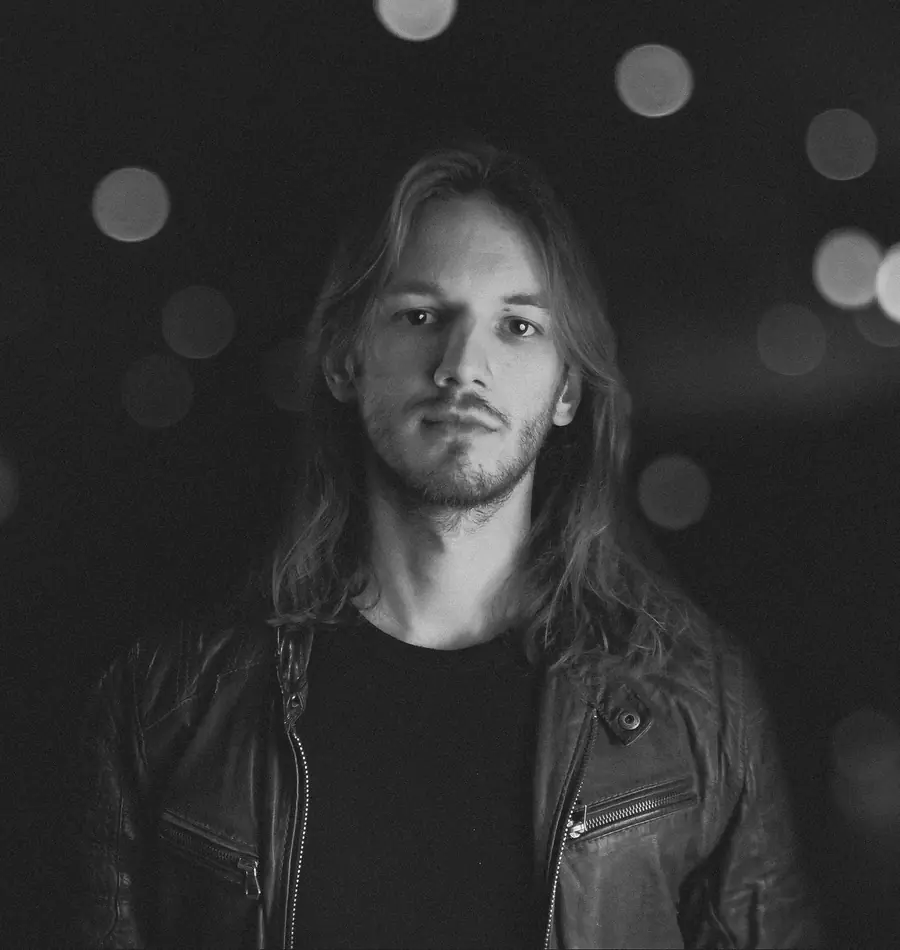
Photo: Maik Styrnol · CC BY-SA 4.0
Maik Styrnol
I've been mixing music for over ten years – studio productions as much as live material, from the first demo to concert recordings in front of several thousand people. That's over a hundred live productions by now: bands, choirs, orchestras, theatre.
Together with my brother Pirmin I run punchline studio in Lahr in the Black Forest. Everything that comes in, I mix personally – no team in the background, no presets. And if I don't think a recording can be turned into something good, I'll tell you up front.
More about Maik · How a live album comes together, from recording to master
WeLive – our own concert film series.

With WeLive we produce our own concert films: recording, mix, master, picture. Every one of these films was captured in a single night and still sounds like a carefully produced studio record. We give our clients' recordings exactly the same treatment.
So this isn't just something we do for clients – we do it for ourselves too. That's why we know our way around live material. Read the case study → · WeLive-Festival.com → · YouTube · Concert film production
Common questions about live mixing.
What we work with.
- Avid Pro Tools Ultimate
- Multitrack recordings up to 64 tracks
- Sample rates 44.1–192 kHz, 24 bit / 32 bit float
- Bleed control, phase correction, room sound control
- Drum enhancement and replacement
- Experience: 100+ live productions
- iZotope RX (de-noise, de-click, de-hum, spectral repair)
- Feedback and unwanted noise removal
- Recovery of clipped passages where possible
- Analogue and digital signal chain
- Streaming: −14 LUFS (Spotify), −16 LUFS (Apple)
- Broadcast: EBU R128 / −23 LUFS
- True peak limiting −1 dBTP
- Gapless, DDP, CD master, ISRC
- Picture-synced delivery for video
- Genelec 8050, Yamaha MSP 5
- Consumer playback check: Teufel, Denon, Harman Kardon
- FabFilter, Pulsar Modular, Tokyo Dawn Labs
- Waves, Soundtoys, Valhalla, UAD / Apollo
Send us your concert.
Two or three raw tracks are enough to start. We'll listen and get back to you within 24 hours with an honest assessment and a price.